The Inner Horizon: Discovering the Essence of Spirituality - PART 1

Many people wonder what spirituality really means beyond religion or ritual. This guide explores spirituality as a powerful journey of self-awareness, compassion, and inner peace — leading us back to our true essence, and reshaping the way we experience life in extraordinary ways!
1. The Quiet Calling Within
What is spirituality and why does it matter?
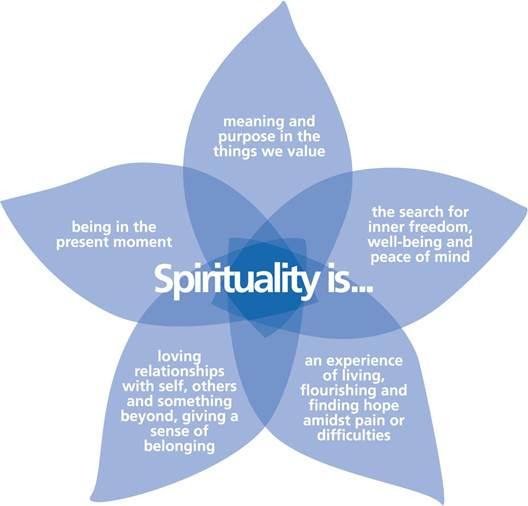
Spirituality is one of those words we hear everywhere but rarely pause to define. For some it carries the scent of religion, for others the haze of incense and mantras. Yet at its heart, spirituality is far simpler and far more human: the search for meaning, connection, and inner peace.
In an age of constant noise and information, many of us feel adrift in distraction — chasing success, pleasure, belonging, or certainty, yet still sensing something is missing — a sense of wholeness that success can’t buy. That emptiness isn’t failure; it’s the invitation. Spirituality matters because it helps us remember what truly fulfills us and answers the questions that achievement can’t: Why am I here? What makes life meaningful? How do I live in alignment with something deeper than circumstance?
At its core, spirituality isn’t a belief system or lifestyle trend. It’s a way of being — how we meet life, how we listen, how we return to ourselves again and again. It’s the practice of turning inward and discovering that everything meaningful — love, wisdom, and peace — has always lived within us.
“Spirituality isn’t something we do. It’s how we meet life, how we listen, how we return to ourselves again and again.”
This guide is an invitation to explore that inner horizon: what spirituality really means, why it’s relevant in modern life, and how the inward journey reconnects us with the essence of who we are.
In This Article
PART 1 (here):
- Turning Inward — The Real Work of Seeing Ourselves
- Living Spiritually — Embodying the True Self
- The Ripple Effect — From Inner to Outer Harmony
- The Inner Horizon — Closing Reflection
2. Beyond Religion — Returning to the Essence
For centuries, religion was the main language through which people expressed their spirituality. It offered community, moral structure, and a shared sense of purpose. But over time, human bias crept in — politics, power, judgment, and fear — clouding the simple truths at the heart of every tradition.
Many people today feel constrained by or disconnected from organized faiths, uncertain where to find genuine meaning. We learned that the divine was somewhere “out there”: in a heaven we had to earn, or in the hands of those deemed holier than us. Yet beneath the noise of doctrine lies a quieter message shared across cultures — that we are the meeting point of the human and the divine.
The language may differ but the essence is the same: know yourself, live with compassion, remember your unity with life. Spirituality reclaims that essence; the return to inner knowing. It invites us to draw inspiration from any tradition while trusting our own inner authority.
Rather than rejecting religion, we can appreciate its poetry and wisdom without being bound by dogma. We can let the wisdom that resonates take root, and gently release the rest. When we strip away fear and hierarchy, what remains is the pulse of the original teaching — self-knowledge, love, and unity. Spirituality is simply returning to that truth in direct experience.
3. The Human Condition — Why We Forget Who We Are
If spirituality is remembering, then our suffering often comes from forgetting.
From birth, we absorb ideas about who we should be: from family, culture, education, religion, society and media. We learn to play roles – the achiever, the caretaker, the rebel, the good girl, the strong one, the rebel. We build identities to stay safe and accepted, but somewhere along the way we lose touch with what’s real.
This forgetting is not a failure; it’s part of the human journey. The mind needs identity to function, but it mistakes the mask for the face. We begin to believe that our worth depends on performance, approval, or control. We chase experiences or possessions hoping they’ll fill the quiet emptiness inside.
Spirituality begins when that illusion starts to crack.
Sometimes it happens through loss or burnout; sometimes through awe or beauty. A whisper arises — there must be more than this. That whisper is the beginning of remembering. It invites us to look beneath the stories and rediscover the part of us that has never been broken. The spiritual path doesn’t add new layers of belief; it gently removes what isn’t true, revealing the wholeness already within.
4. The Layers of Being — The Map Inward
To understand spirituality, we first need to understand ourselves. But just as the ocean has depths unseen from its surface, we too are layered beings.
These layers aren’t mystical abstractions; they are a practical a way of understanding the different dimensions of our lived experience— physical, emotional, mental, energetic, and spiritual — each layer interwoven with the others. Exploring them offers a map inward that helps us see we’re far more than personality or past.
The Physical Body — Our Anchor in the World
The physical body is where spirituality begins — not as something to escape, but as the living foundation of our experience. Every breath, heartbeat, and sensation is a conversation between you and existence itself.
Learning to listen to the body — its signals, rhythms, and limits — is an act of reverence. This embodied presence is a form of mindful awareness that supports all deeper spiritual work. It teaches grounding, presence, and respect for life’s intelligence moving through form.
The body is not separate from the spiritual path; it is the doorway to it.
The Emotional Body — The Language of Feeling
Beneath the physical sits the emotional layer. Emotions are energy in motion, carrying information about our values, fears, desires, and wounds.
Many of us were taught to control or suppress emotions, to hide sadness or anger, to stay composed. But emotions are not flaws to fix; they are messengers. When we meet them with patience and compassion, they guide us back to parts of ourselves we’ve neglected.
Spiritual maturity is not emotional detachment — it’s emotional fluency: the ability to feel fully without overwhelm, to allow what arises without judgment, and to let each emotion move through rather than take root.
To feel is to heal and is foundational for inner transformation.
The Mental Body — The Realm of Story and Belief
The mind is a remarkable storyteller. It creates patterns, meaning, and identity. But when left unchecked, it can trap us in loops of fear, comparison, or doubt.
The mental body is made of thoughts, beliefs, and narratives — many inherited, some chosen. Much of our suffering arises not from events themselves, but from the meanings we assign to them.
The work here is not to silence the mind but to see through it — to recognize thoughts as passing weather rather than truth. When we observe the mind with awareness, we discover that we are not its contents but its witness. That realization creates space — and in that space, peace and self-understanding begins.
The Energetic Body — The Flow Beneath the Surface
Between the tangible and the invisible lies the energetic body — the subtle current of life force that animates everything. Different traditions call it prana, chi, or mana, but the experience is universal: it’s the aliveness we feel when inspiration strikes, the lightness after release, the vibration of vitality that tells us we’re connected.
This energetic layer acts as a bridge between our physical and spiritual aspects. When energy flows freely, we feel balanced, clear, and alive. When it stagnates — through stress, trauma, or disconnection — we feel heavy or numb.
Practices like breathwork, meditation, movement, and energy healing help restore that flow. Future articles will explore this more deeply — including energy centres, meridians, and the anatomy of subtle energy.
The Spiritual Body — The Still Point of Awareness
At the deepest level lies the spiritual body — the dimension of consciousness itself.
It’s the quiet awareness that witnesses every thought, emotion, and sensation, yet is untouched by them. It’s what you sense in moments of deep peace, awe, or love — when, even for a moment, you stop striving and simply are.
This layer isn’t something we acquire; it’s what we uncover when everything else falls silent. It’s the essence that was there before you had a name or story — the part of you that has never been broken.
Some call it the soul, some call it pure awareness, some call it spirit. The label doesn’t matter. What matters is the felt knowing that beneath all the noise and form, there is stillness — and that stillness is who you are. This is the essence uncovered during a spiritual journey — the depth beneath identity.
Integration — Wholeness as the Real Practice
These five layers are not stacked like separate shells; they interweave like threads in a single tapestry. What affects one affects them all. When you heal emotionally, your energy shifts. When your thoughts soften, your body relaxes. When your body is nourished, your spirit shines brighter.
Spirituality, at its most grounded, is not about leaving the human behind but embracing every layer of it. The more we integrate the physical, emotional, mental, energetic, and spiritual aspects of ourselves, the more whole we become — not by adding anything new, but by remembering what’s already here. This is the foundation for authentic spiritual growth.
Hit the link below to continue reading PART 2
External resources for further learning: https://en.wikipedia.org/wiki/Category:Spirituality